Ingles Street Residential Tower
-
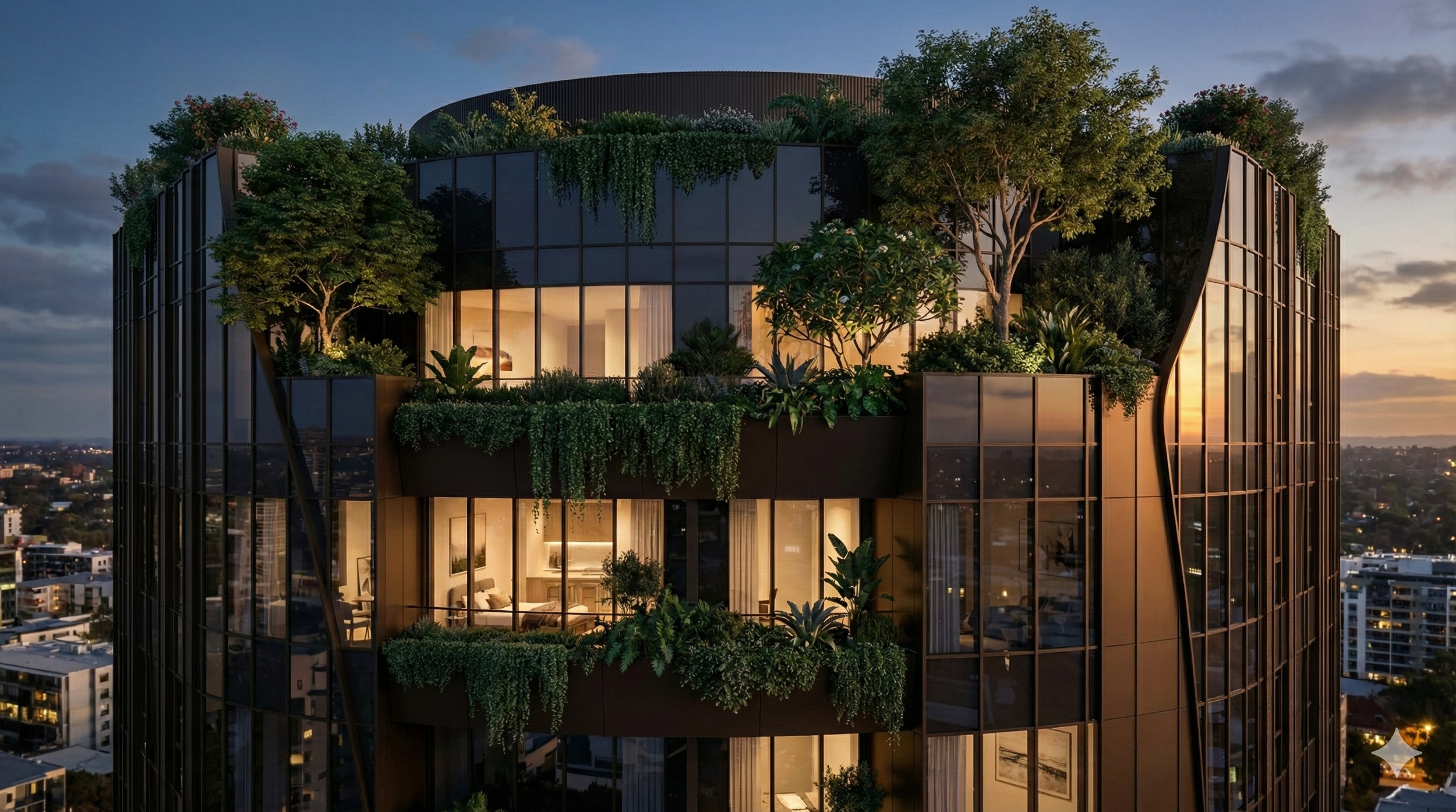
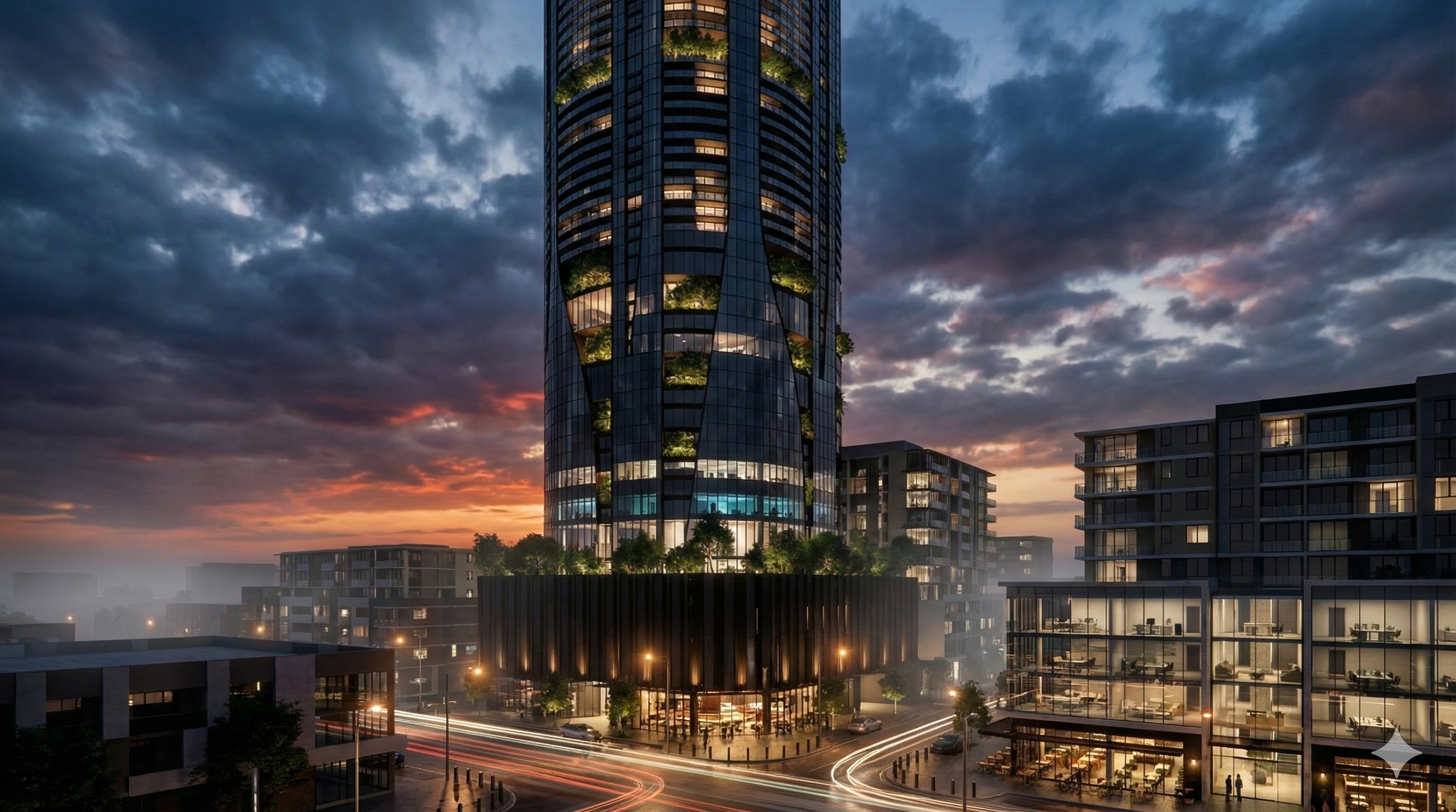
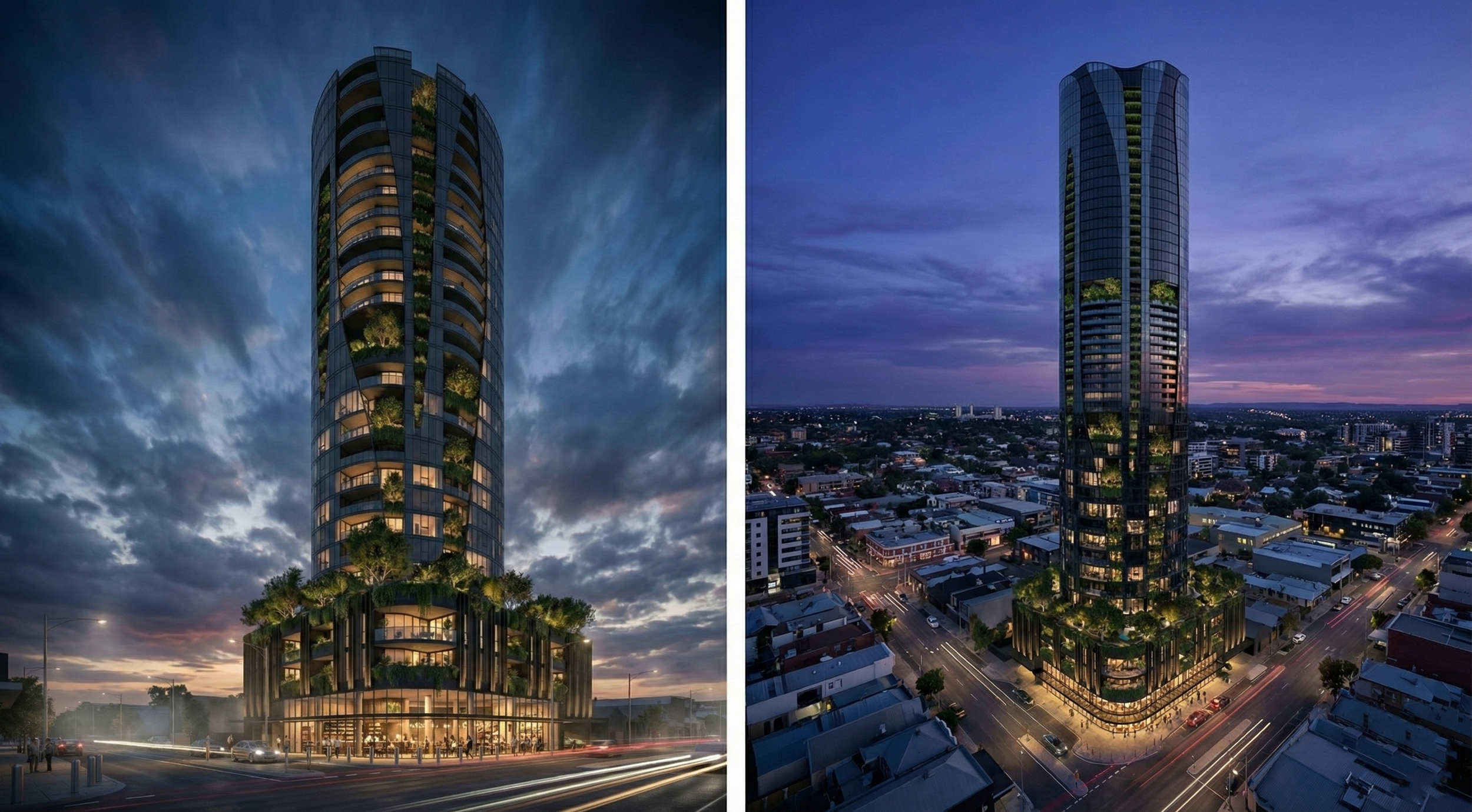
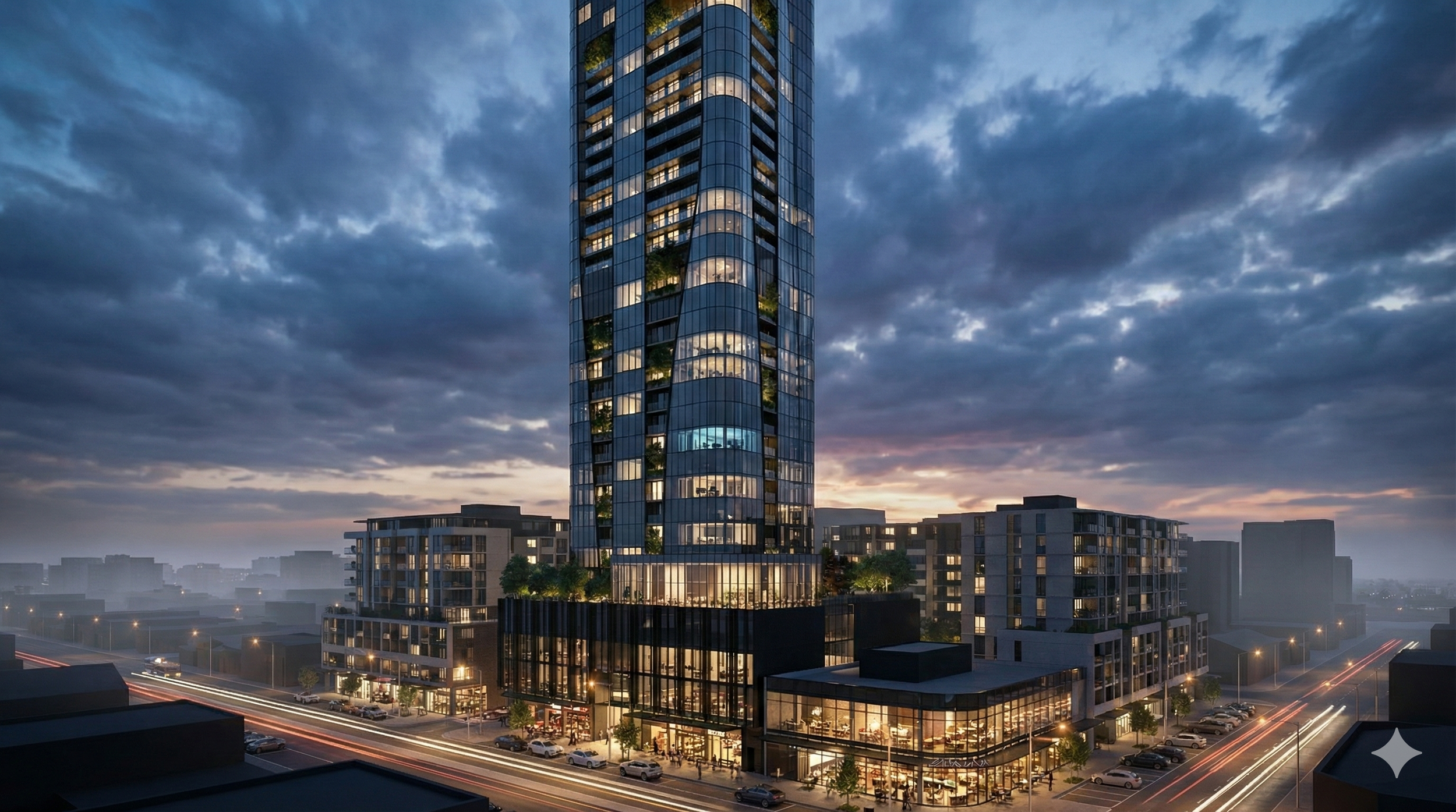
Ingles Street rises as a 60-storey residential tower, a slender yet grounded presence on the urban fabric. The building’s massing is arranged as a tapered vertical volume with a defined podium and a recessed crown, creating a readable base, shaft and cap composition that responds to street scale while addressing skyline presence.
Façade and materials
The primary façade language is a disciplined grid of aluminium-framed windows and glazed curtain wall panels interspersed with precast concrete bands. A subtle variation in panel depth and finish produces changing shadow lines across the day, reducing visual bulk and animating the elevation.
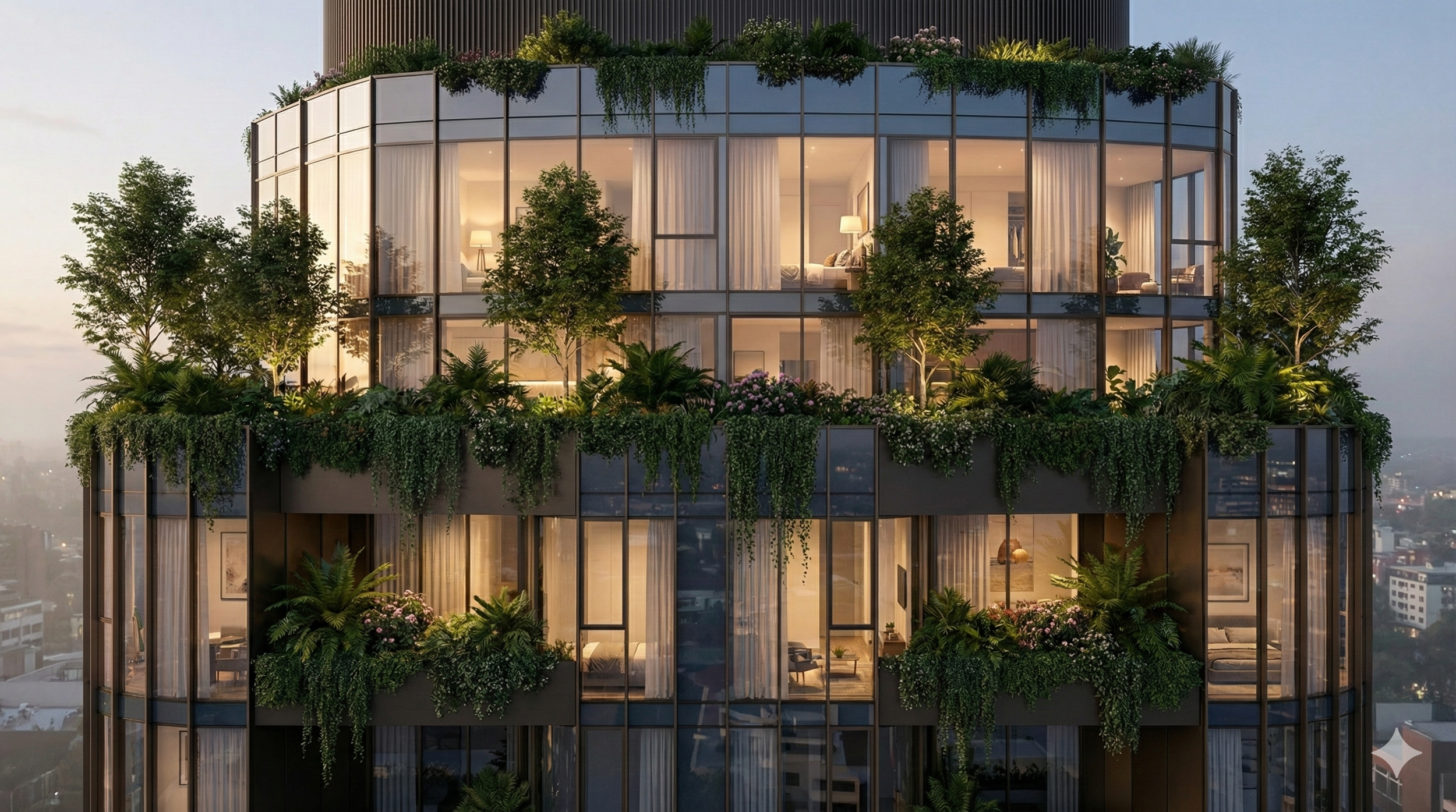
Balconies are integrated as recessed terraces with glass balustrades and metal privacy fins, arranged to provide cross-ventilation and framed views. Balconies step and pivot at select floor intervals to create terrazzo-like setbacks and to break monotony.
The podium is faced in textured stone and warm-toned ceramic rainscreen panels to register human scale at street level. At upper levels, a lighter-coloured high-performance glazing system reduces heat gain and enhances slenderness.
Roof and crown are treated with metal cladding and perforated sun screens, concealing plant equipment while allowing night-time uplighting to emphasise the tower’s cap.
Plan organisation
The tower is organised on a central core plan. The core houses lifts, stairs, service risers and refuse chutes, allowing efficient apartment layouts and flank cross-ventilation where possible.
Typical floors contain a mix of apartment types to total 250 units across the tower: one-, two- and three-bedroom apartments and a limited number of penthouse duplexes at uppermost levels. Unit layouts prioritise natural light, functional circulation and adaptable living zones.
Corner apartments feature dual-aspect glazing; internal planning minimises long corridors and locates wet areas adjacent to service risers to improve acoustic separation and maintenance access.
Floor plates are dimensioned to provide slender depth to daylight all living spaces, with deep balconies forming semi-outdoor rooms and shading devices integrated into the façade system.
Ground plane and podium
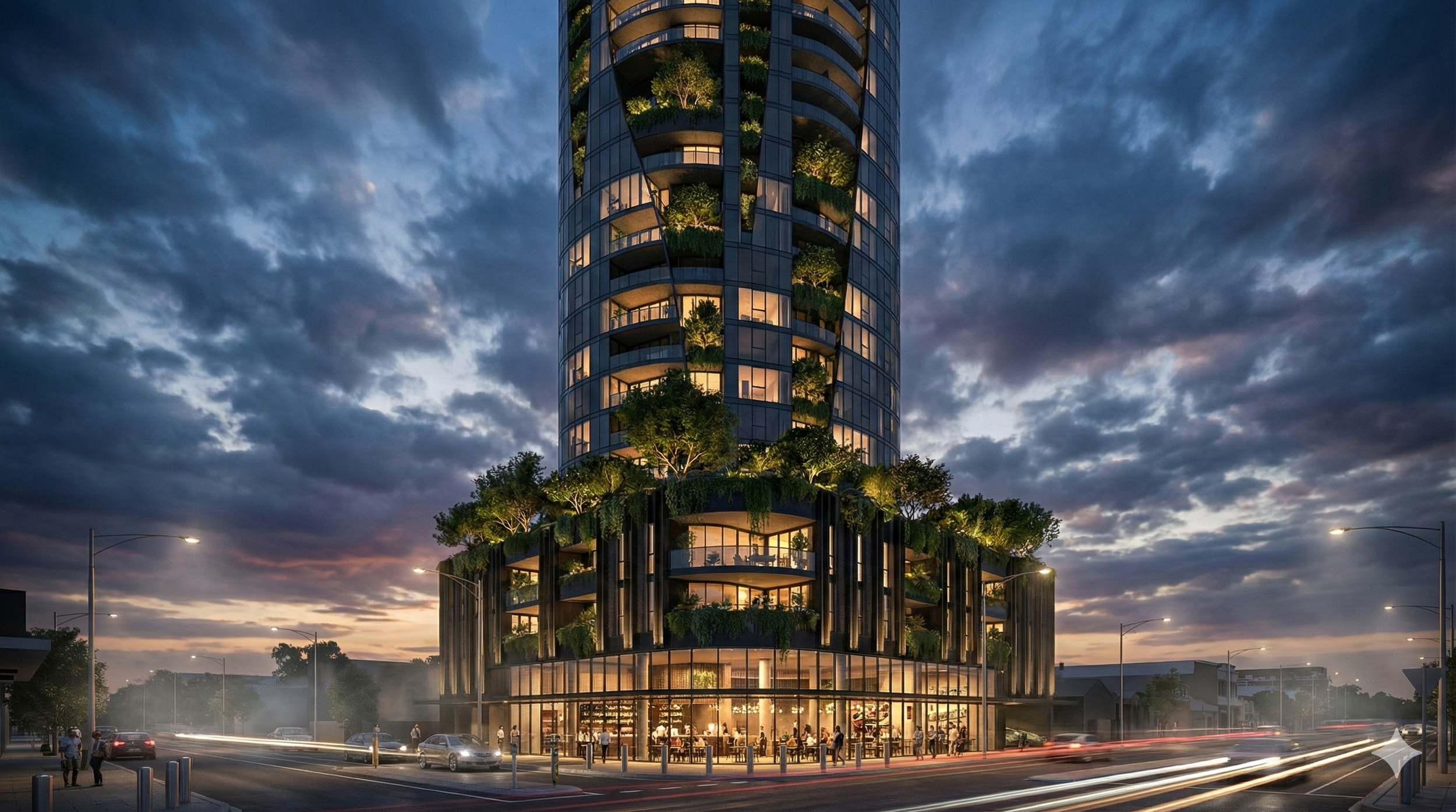
The ground floor accommodates a restaurant and commercial tenancies arranged along Ingles Street, creating an active frontage. The restaurant features a double-height bay with generous glazing and a semi-external terrace that addresses the footpath.
Commercial spaces are accessed directly from the street, with separate residential lobby entry set back and sheltered for resident arrival and security. Services and loading are located at the rear of the podium to keep service activity away from public frontage.
Landscaping at the base includes canopy trees, low hedging and a paved forecourt that defines transition from public realm to private entry. Lighting, seating and bicycle parking are integrated into the landscape design to promote pedestrian use.
Vertical circulation and amenity
A two-tier lift strategy separates high-rise express lifts for upper residential zones from local lifts serving lower zones, reducing wait times and improving vertical efficiency.
Communal amenities are provided on a dedicated mid-level floor and at the rooftop: a resident lounge and gym on an intermediate amenity level with indoor/outdoor connection; a landscaped rooftop terrace and barbecue terrace occupying the recessed crown provide communal outdoor recreation with panoramic views.
Plant rooms and building services are zoned at mechanical floors to reduce servicing runs and to allow future flexibility in HVAC and electrical upgrades.
Sustainability and environmental response
The façade incorporates high-performance glazing, external shading fins and recessed balconies to control solar gain while preserving visual transparency.
Natural ventilation strategies are employed where possible through operable windows and cross-ventilated apartment types, reducing reliance on mechanical cooling for mild seasons.
Rainwater harvesting for irrigation, LED lighting throughout, and energy-efficient MEP systems are specified to achieve reduced operational energy use. Provision for future rooftop photovoltaic installation is included in the structural and electrical brief.
Materials selection emphasises durability, low-maintenance finishes and locally-sourced stone and timbers where feasible to reduce embodied carbon and support lifecycle performance.
Acoustic and fire safety
Cross-wall construction and staggered slab edges at bedrooms provide acoustic separation between units. Balconies include acoustic baffles at party walls where required.
The building complies with contemporary fire safety standards: protected stair cores, pressurised egress routes, sprinklers, fire-fighting lifts and compartmentation strategies. Evacuation modelling influenced core sizing and refuge planning.
Contextual integration
The podium scale and material palette respond to neighbouring streetscape, setting a human-scaled edge to Ingles Street and enhancing pedestrian amenity. Upper levels step back to preserve skylines and to reduce overshadowing at street level.
Public realm improvements at the tower base include widened footpath, additional street trees and seating to encourage active frontage and to integrate the building into the local precinct.
Construction and structure
The structural system is a reinforced concrete core and post-tensioned flat slab perimeter, providing column
-
Ingles St Port Melbourne VIC 3207, Australia
-
Complete
-
Concept Design