Outdoor Play in the UAE: Designing Safe, Engaging, and Climate-Responsive Environments
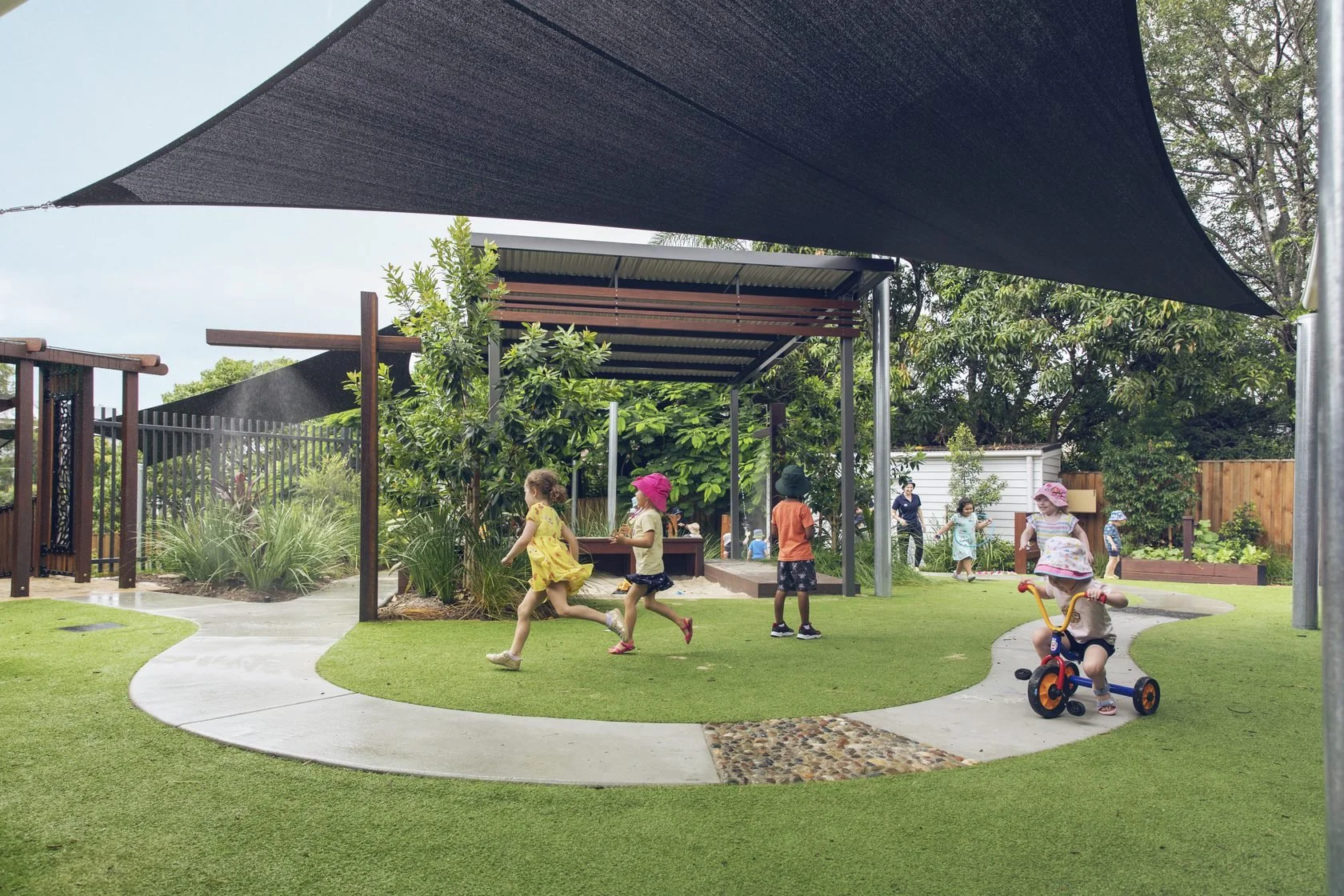
Why Outdoor Play Is Essential in Early Childhood Education
Outdoor play is a fundamental component of early childhood development. It supports physical coordination, cognitive growth, social interaction, and emotional resilience. In high-performing early learning environments, outdoor space is not treated as an optional extra — it is a core learning environment.
In the UAE, where climate conditions are extreme for parts of the year, the challenge is not whether to provide outdoor play, but how to design it intelligently so it remains safe, usable, and engaging year-round.
Designing for the UAE Climate: Heat, Shade, and Comfort
The UAE climate places unique demands on childcare outdoor environments. Poorly designed play areas often become unusable for large portions of the day or year, limiting learning opportunities and operational flexibility.
4 Successful climate-responsive strategies include:
Permanent shade structures, pergolas, and canopies
Building orientation that minimises western sun exposure
Integration of covered verandas and courtyards
Use of planting and soft landscaping for microclimate cooling
Rather than eliminating outdoor play during warmer periods, well-designed environments adapt to climate, allowing children to remain connected to nature safely.
Risk-Managed Play, Not Risk-Free Play
Modern early learning philosophy recognises that children need exposure to managed risk in order to develop confidence, coordination, and problem-solving skills.
Architecture plays a critical role in enabling this safely.
Well-designed outdoor play spaces often incorporate:
Changes in level and terrain
Climbing, balancing, and movement elements
Varied surface textures
Clearly defined fall zones and compliant soft surfaces
The goal is not to remove challenge, but to design risk thoughtfully, with clear visibility for educators and appropriate safety controls.
Integrating Learning Into Outdoor Environments
Outdoor areas should be designed as extensions of the learning environment, not simply recreational zones.
Effective outdoor learning spaces may include:
Outdoor classrooms or gathering areas
Sand, water, and sensory play zones
Loose-parts play that encourages creativity
Quiet outdoor retreat spaces
This allows educators to deliver curriculum seamlessly across indoor and outdoor settings, increasing flexibility throughout the day.
Indoor–Outdoor Connection and Supervision
Strong visual and physical connections between indoor and outdoor spaces are critical in childcare design — particularly in the UAE, where rapid transitions between environments are common.
Successful centres typically feature:
Direct access from learning rooms to outdoor areas
Large glazed openings for visual supervision
Transitional shaded zones acting as thermal buffers
Robust materials that withstand sand, water, and high use
These design strategies improve safety, supervision, and operational efficiency.
Materials, Durability, and Maintenance in the UAE Context
Outdoor play environments in the UAE must withstand:
Intense UV exposure
Heat-related material expansion
Sand and dust
High daily usage
Architectural material selection is therefore critical. Durable, low-maintenance finishes not only improve longevity but reduce long-term operational costs for operators.
Regulatory and Safety Considerations
Outdoor play areas must also comply with local authority and safety requirements, including:
Minimum outdoor play area provisions
Safe fencing and controlled access
Compliant surface finishes
Emergency egress and supervision requirements
Early coordination with regulatory authorities helps ensure that safety and design quality are achieved together, rather than one compromising the other.
References:
KHDA Early Childhood Centre Guidelines – https://www.khda.gov.ae
ADEK Early Education Policies – https://www.adek.gov.ae
Creating Value Through Thoughtful Outdoor Design
For operators and developers, well-designed outdoor environments provide tangible benefits:
Increased enrolment appeal
Greater daily program flexibility
Improved child wellbeing and engagement
Stronger long-term asset value
In a competitive UAE childcare market, outdoor design quality is a clear differentiator.
Conclusion: Outdoor Spaces as Active Learning Environments
In the UAE, outdoor play spaces must work harder than in many other regions. When designed thoughtfully, they become safe, engaging, and climate-responsive environments that support learning throughout the year.
High-quality childcare architecture recognises that outdoor spaces are not secondary, they are an essential part of the educational experience.