Designing World-Class Childcare Centres in the UAE: What Sets Exceptional Facilities Apart
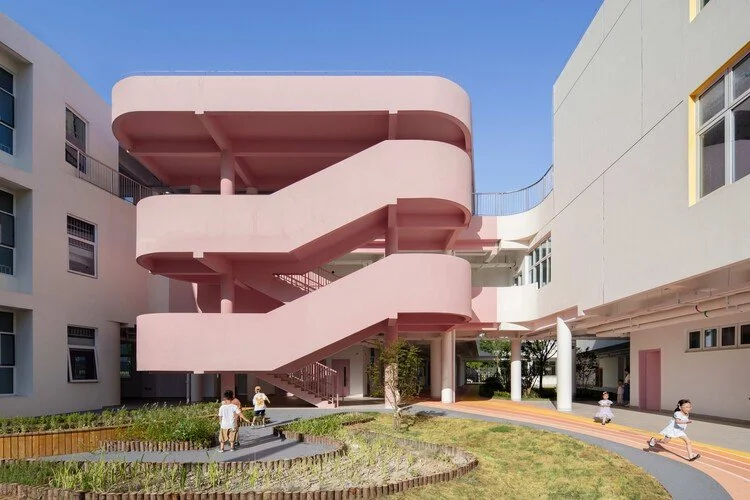
The UAE’s Rapidly Evolving Early Learning Sector
The United Arab Emirates has become one of the most progressive regions globally for early childhood education. With strong government oversight, increasing private investment, and high parental expectations, childcare facilities in the UAE are no longer viewed as simple functional buildings.
They are purpose-designed learning environments that must balance:
Child development outcomes
Regulatory compliance
Climate responsiveness
Brand and market positioning
Architecture sits at the centre of this equation.
Beyond Compliance: Designing for Children, Not Just Regulations
Every childcare centre in the UAE must comply with local authority requirements such as KHDA (Dubai), ADEK (Abu Dhabi), and Civil Defence approvals. However, compliance alone does not create a great childcare centre.
Exceptional facilities go further by embedding child-centred design principles into every decision.
Key architectural considerations include:
Clear spatial legibility so children intuitively understand how to use each space
Age-appropriate room proportions that avoid over-scaled or institutional environments
Logical adjacencies between learning rooms, amenities, and outdoor play
Safe, unobstructed sightlines for educators at all times
When spaces are designed specifically for how children move, play, and learn, the result is a calmer, more effective learning environment.
Reference:
KHDA Early Childhood Centre Guidelines – https://www.khda.gov.ae
ADEK Private Nursery Policies – https://www.adek.gov.ae
Climate-Responsive Childcare Design in the UAE
Designing for the UAE climate is one of the most critical factors in childcare architecture. High temperatures, intense sun, and seasonal humidity require a considered architectural response — particularly where young children are involved.
4
Successful childcare centres typically incorporate:
Deep overhangs, verandas, and colonnades
Carefully oriented buildings to minimise heat gain
High-performance façades and insulated roof systems
Shaded outdoor play areas designed for year-round use
Rather than eliminating outdoor play due to climate, the best designs adapt to it, allowing children to remain connected to nature safely and comfortably.
Indoor–Outdoor Learning as a Design Strategy
Modern early learning philosophy strongly supports indoor–outdoor integration. In the UAE context, this requires architectural finesse.
Well-designed centres often feature:
Covered outdoor learning terraces
Large operable openings between classrooms and play areas
Transitional shaded zones that act as thermal buffers
Robust materials suitable for sand, water, and high use
This approach allows learning to flow naturally throughout the day while giving educators flexibility to respond to weather conditions.
Architecture as a Competitive Advantage for Operators
In a competitive UAE childcare market, architecture is a powerful differentiator. Parents often make decisions based on their first impression of a facility — long before curriculum details are discussed.
High-quality architectural design communicates:
Safety and professionalism
Educational quality
Long-term stability
Trustworthiness
For operators, this translates into:
Stronger enrolment demand
Higher staff satisfaction and retention
Improved operational efficiency
Increased long-term asset value
Architecture becomes part of the brand story, not just the container for it.
Designing for Educators and Operations
Exceptional childcare architecture also recognises the importance of staff wellbeing and day-to-day operations.
Key operational design considerations include:
Efficient circulation that reduces staff fatigue
Clearly defined staff-only zones
Logical back-of-house planning
Acoustic control to reduce noise stress
When educators are supported by the built environment, the quality of care and learning outcomes improves measurably.
Long-Term Value Through Thoughtful Design
Childcare centres are long-term investments. Decisions made at concept design stage affect:
Approval timelines
Construction costs
Ongoing maintenance
Future adaptability
Engaging specialist childcare architects early ensures that compliance, pedagogy, climate response, and brand alignment are resolved holistically — not retrofitted later at greater cost.
Conclusion: Setting a New Benchmark for Childcare Architecture in the UAE
World-class childcare centres are not defined by size or budget alone. They are defined by clarity of intent, quality of design, and deep understanding of children, educators, and context.
In the UAE, where expectations are high and the market is sophisticated, architectural excellence is no longer optional, it is fundamental.